

To support the transition to cleaner mobility, Michelin has invested in the development of hydrogen technologies capable of offering a high-performance, sustainable alternative to conventional electric solutions.
Certain vehicles, trucks, utility vehicles, civil engineering machinery, require maximum availability and high range despite carrying heavy loads. However, batteries alone cannot meet the constraints of these intensive uses, both in terms of range and downtime.
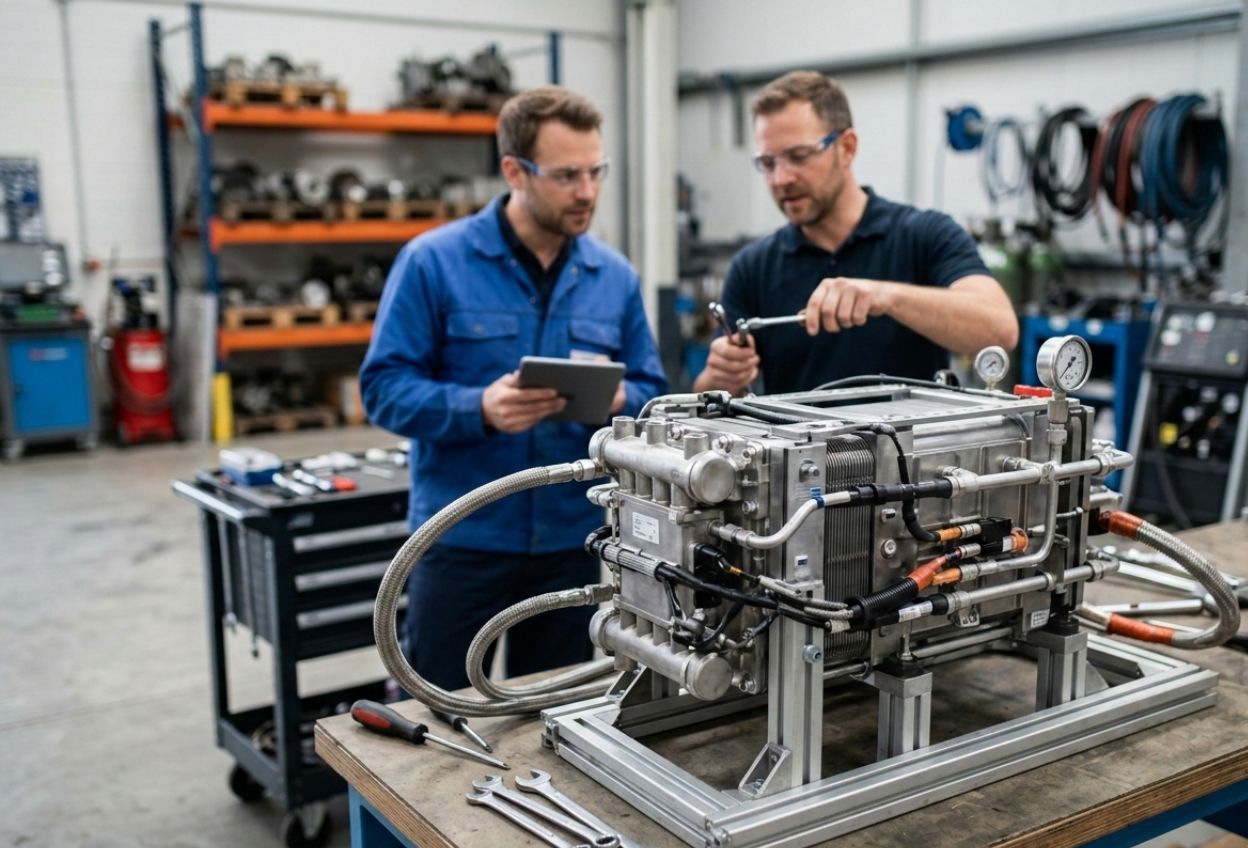
MRT has designed a complete fuel cell system, engineered to meet the most stringent industrial requirements.
By combining electrochemical expertise, mechanical skills, electronic mastery and software know-how, the teams have developed a compact, robust solution that can be integrated into a variety of vehicles while guaranteeing stable and reliable performance.
The system is based on a proton exchange membrane (PEM) fuel cell. MRT was responsible for the mechanical design, gas flow management, cooling, complete sensor integration, precise cell monitoring and optimised actuator control.
After a comprehensive series of tests at the Michelin site in Switzerland, this technology was industrialised at Symbio — the joint venture between Michelin, Forvia and Stellantis — and continues to evolve at SATS, its advanced research centre in Switzerland.
Today, Symbio produces 40 kW, 75 kW and 150 kW PAC systems, which are deployed by car, bus and heavy goods vehicle manufacturers.
This technology offers high autonomy suitable for intensive use, continuity of service essential to operators, a significant reduction in emissions and improved productivity thanks to minimised downtime.
This development illustrates MRT’s ability to imagine, design and industrialise complete, high-performance hydrogen solutions.